Open-method tools
Calculators that show their work
Most solar calculators hand back a number and hide the arithmetic. These print the formula, the inputs, and every assumption applied along the way, so you can redo the calculation by hand, substitute your own derating factors, and catch it when we are wrong. Run them in order: work out the daily load first, then the battery, then the array, then the wire.
Watt-hours made visible
Battery Runtime Calculator
Estimate how long a battery can power a load after inverter loss and depth-of-discharge limits.

Daily load to panel watts
Solar Panel Sizing Calculator
Turn daily energy use, sun hours, and system losses into a practical solar panel target.
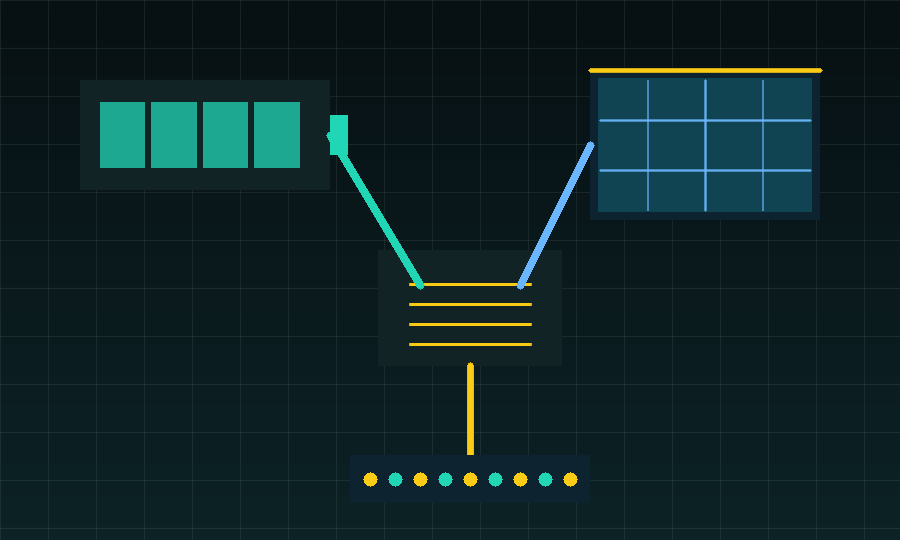
Wire planning before buying copper
Voltage Drop Calculator
Estimate voltage drop by wire size, run length, current, and system voltage for low-voltage solar wiring.
What these tools will not do
They produce planning estimates, not engineering submittals. They do not know your local code amendments, your roof structure, your permit requirements, your panel's exact temperature coefficients, or the condition of your existing wiring. Nothing here substitutes for a manufacturer's manual or a qualified electrician, and none of it applies to grid-tied systems.
Where a calculator applies a default, that default is stated on the page along with the source it came from. If a default does not fit your build, change it — that is what the inputs are for.