Every formula is shown
Guides and calculators print the equation, the inputs, and the assumptions, so a reader can redo the arithmetic by hand and catch our mistakes.
Show-your-work planning for small off-grid systems
Sizing guides, open-method calculators, and cited reference tables for sheds, RVs, cabins, cameras, and backup power projects.
Guides and calculators print the equation, the inputs, and the assumptions, so a reader can redo the arithmetic by hand and catch our mistakes.
Ampacity, derating, sun hours, and battery figures cite the standard or datasheet they came from, with the table number, rather than asking for trust.
We are an independent publisher, not electricians. Grid-tie, roof work, and high-current battery banks are marked as licensed-professional territory.
Start with the math
Each tool shows the equation it evaluates, defines every input, lists the assumptions it applied, and works through a full example. If a default does not fit your build, change it.
Watt-hours made visible
Estimate how long a battery can power a load after inverter loss and depth-of-discharge limits.
Daily load to panel watts
Turn daily energy use, sun hours, and system losses into a practical solar panel target.
Wire planning before buying copper
Estimate voltage drop by wire size, run length, current, and system voltage for low-voltage solar wiring.
Cited lookup data
Conductor ampacity, voltage drop, overcurrent protection, and battery specifications — each table names the standard or datasheet it came from, the assumptions behind it, and the point at which it stops being valid. Where two standards disagree, we publish both and explain why.
Two different standards give two different answers for the same wire. This page shows both, explains why they disagree, and walks through applying the derating factors that turn a table value into a number you can actually design around.
Voltage drop, not ampacity, is what usually forces you into bigger wire on a low-voltage system. These tables give the longest run each conductor supports before the drop exceeds your budget, and the formula so you can compute any case they do not cover.
American gauge numbers and metric cross-sections do not line up neatly, and the nearest metric size is often smaller than the AWG size it is sold as replacing. This table gives the exact figures plus the buying traps that make a cable perform worse than its label suggests.
Overcurrent protection is the part of a small solar system that does nothing at all until the day it is the only thing standing between a short circuit and a fire. This page covers the sizing rules, where each device belongs, and the interrupting-rating question that catches almost every lithium build.
Guides
Guides that take a real decision from requirement to parts, deriving every number on the page rather than asserting it.
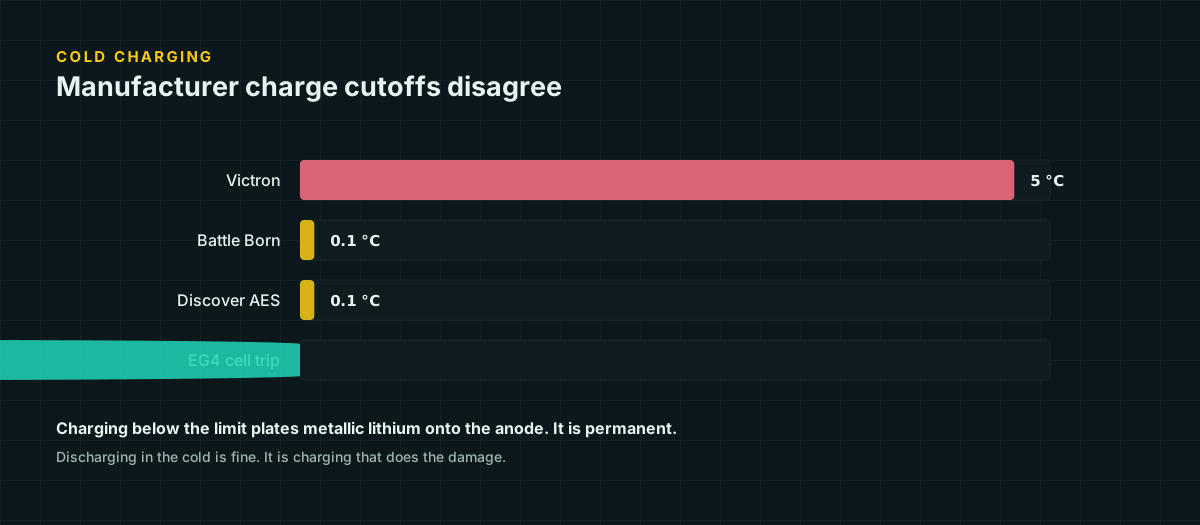
The lithium plating mechanism behind LiFePO4's cold-charging limit, how manufacturer cutoffs differ, and how lead-acid's very different freezing-point constraint compares.
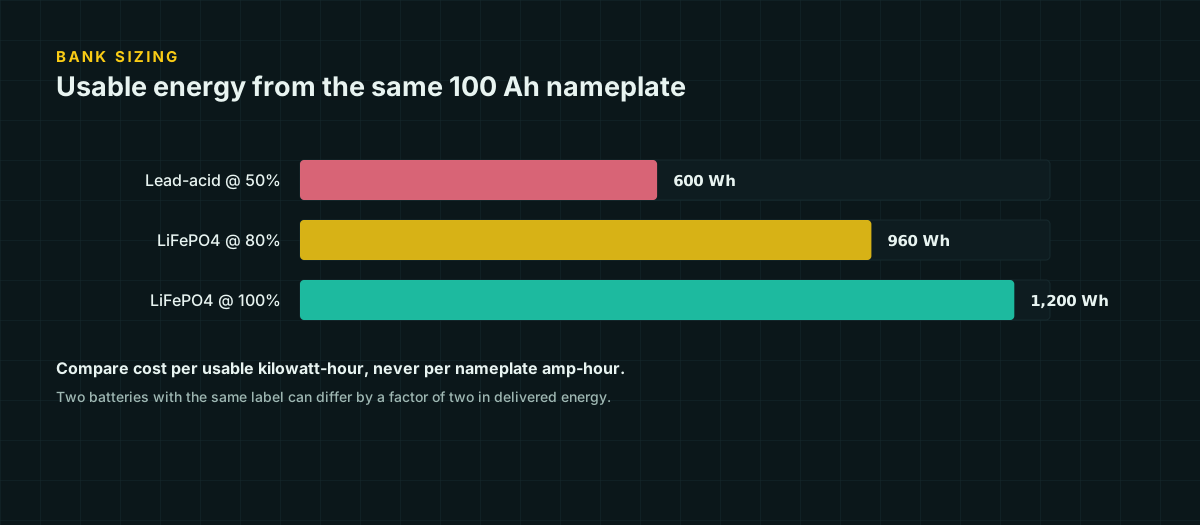
A sizing method for small off-grid battery banks: how days of autonomy drive cost, why an oversized lead-acid bank can shorten its own life, and how to match array output to charge acceptance.
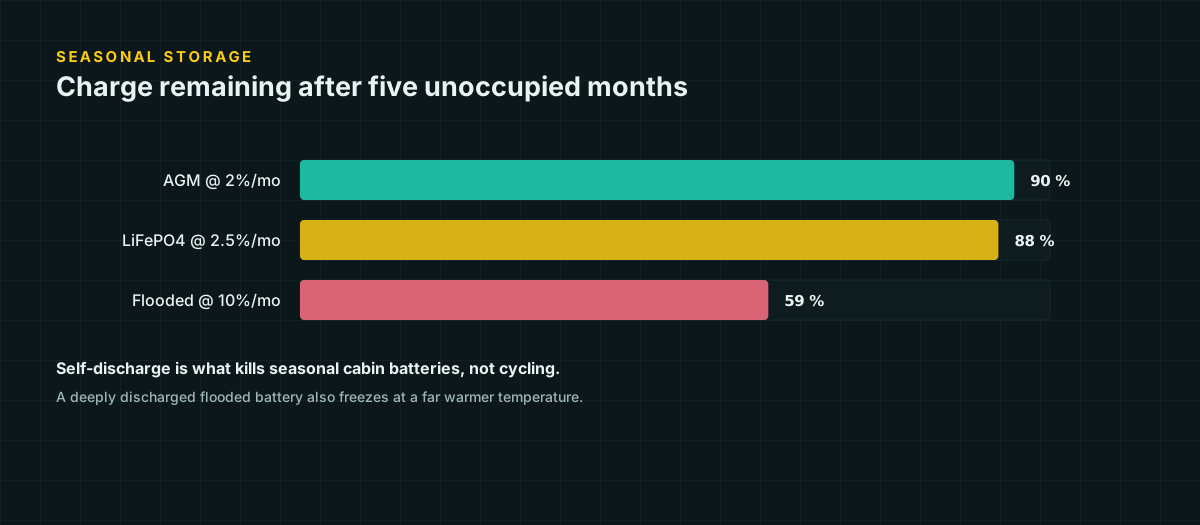
Planning a cabin power wall for a building nobody occupies most months: self-discharge, freeze risk, seasonal battery chemistry, equipment layout, ventilation, surge loads, and the generator question.
How to read this site
We are an independent publication, not licensed electricians, and we say so plainly. Instead of asking you to trust a byline, we print the formulas, cite the table numbers, and mark the figures we could not verify against a primary source. Where a published standard and a manufacturer's manual disagree, we show you both rather than picking one quietly.
That also means knowing where to stop. Grid interconnection, roof work, permitted building wiring, and large battery banks are professional territory, and we mark them as such rather than walking you into them.