A Maintenance Log for Small Solar Systems
What to record in a solar maintenance log and why each entry has diagnostic value later, with chemistry-specific intervals, torque re-checks, and a usable log template.
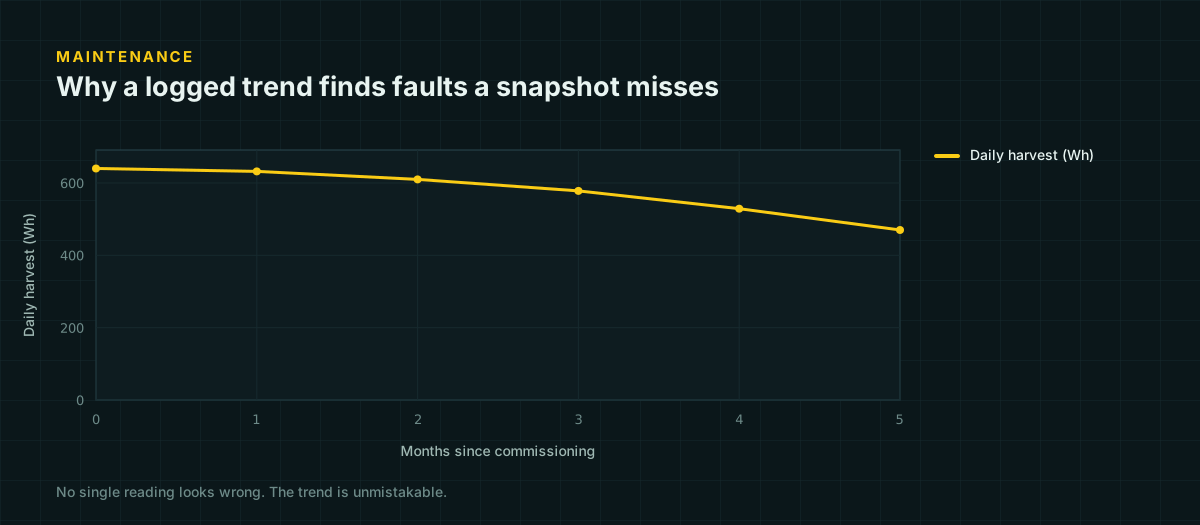
A solar system does not usually fail all at once. It drifts — a connection gets a little warmer each season, a charge takes a little longer each month, a battery holds a little less each year — and drift is invisible in a single measurement. It only becomes visible when you have last month’s number to compare against. That is the entire case for keeping a log: not because any one entry matters much, but because the log is the only thing that turns a slow trend into something you can see before it becomes a failure.
What to record, and why each entry earns its place
Not every number is worth writing down. The ones below are on this list because each answers a specific question a future version of you will need answered.
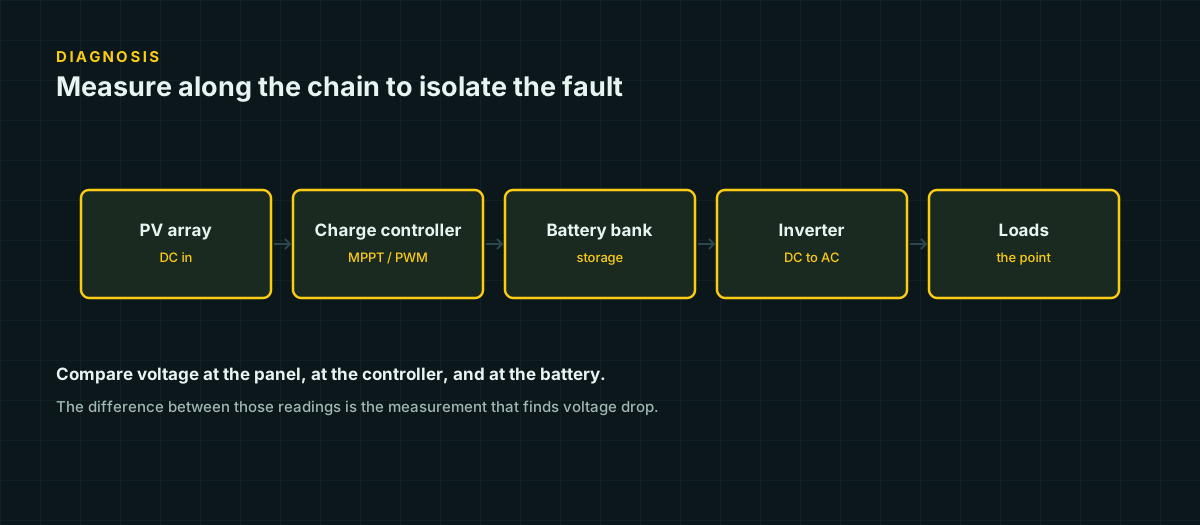
Battery voltage at rest and under load. Resting voltage tracks state of charge and, over months, whether the battery’s overall capacity is holding. Under-load voltage catches internal resistance rising with age long before resting voltage shows anything unusual — a battery that reads fine at rest can still sag badly the moment it is asked to deliver current.
Charge time to absorption. How long the controller takes to reach absorption voltage from a known starting state of charge, under comparable sun conditions. This single number is sensitive to almost everything that can go wrong: a slowly loosening connection, a battery losing capacity, a controller setting drifting, or panels soiling faster than expected. A charge time that creeps upward month over month is one of the earliest warnings this log can produce.
Daily harvest (Wh or Ah) against the same time of year. Weather varies day to day, which makes any single day’s harvest nearly useless for diagnosis. Compared against the same week last year, it becomes a real signal — a harvest trending down at the same point in the seasonal cycle across multiple years points to panel degradation, accumulating soiling, or new shading, not weather noise.
Lug and terminal temperature or torque check. A connection that was torqued correctly at installation does not necessarily stay that way — see the torque section below. Recording which connections were checked and when tells you how overdue the next check is.
Electrolyte level and specific gravity (flooded only). Flooded batteries lose water from their electrolyte during normal charging, and specific gravity is a direct measure of state of charge and cell health that sealed chemistries simply do not need or provide a way to check.
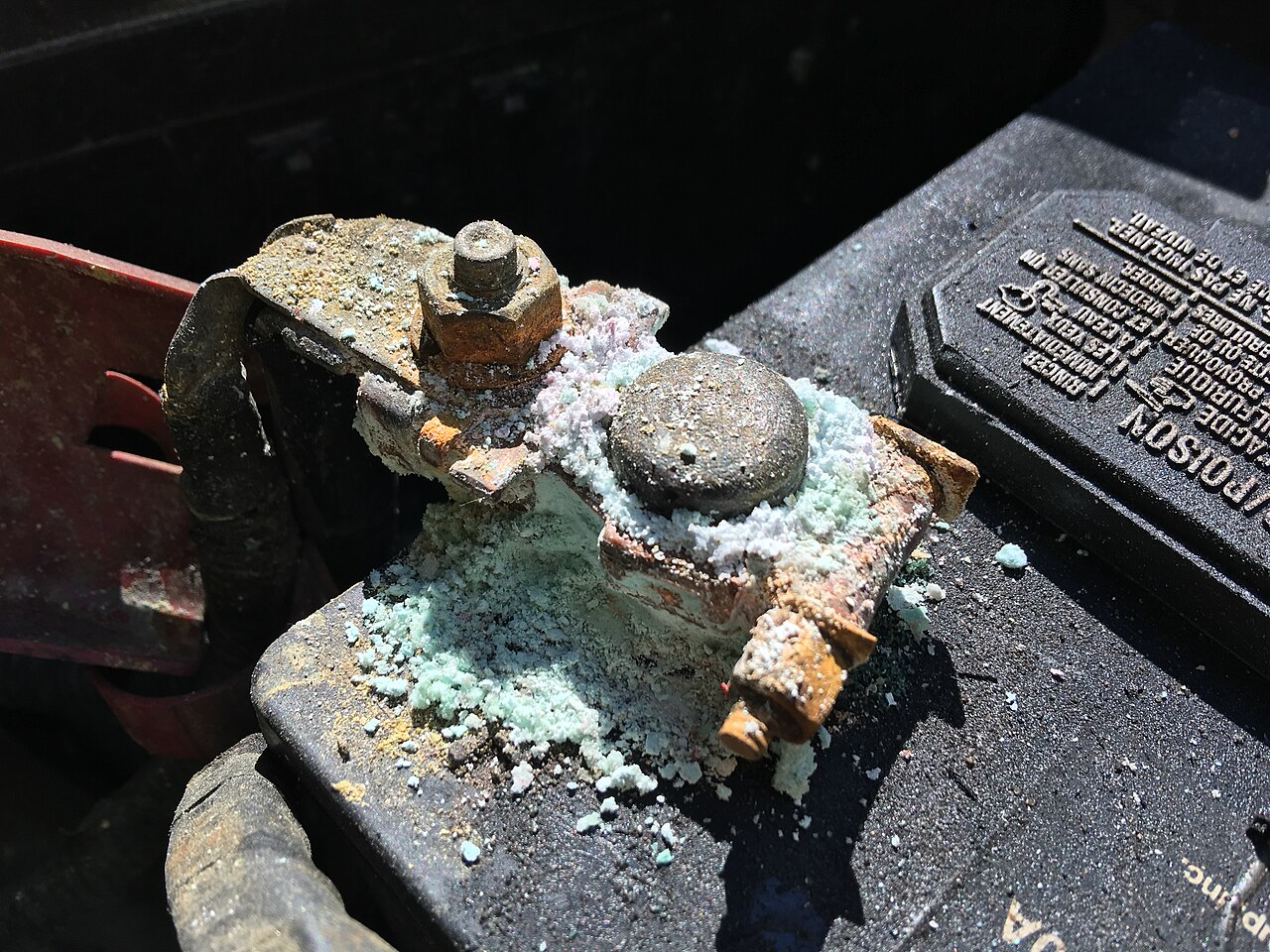
Visual inspection notes. Corrosion at terminals, cracked or discolored insulation, water intrusion in an enclosure, pest damage, loose mounting hardware. None of these produce a number, but writing “green corrosion starting at negative bus, cleaned” is what lets you notice next time that it came back faster than it should have.
Ambient and enclosure temperature. Both battery capacity and charge acceptance are temperature-dependent, and a harvest or charge-time trend that only shows up in winter is telling you something different than one that persists year-round.
Intervals by chemistry: flooded needs work that lithium does not
The single biggest maintenance-schedule difference in a small solar system is chemistry, and it comes from how differently these battery types lose energy and materials while just sitting there.
| Chemistry | Self-discharge per month | Electrolyte check needed | Typical maintenance interval |
|---|---|---|---|
| LiFePO4 | 2–3% | No — sealed | Quarterly log entry; visual and torque check twice yearly |
| AGM | Under 2% at 20 °C | No — sealed | Quarterly log entry; visual and torque check twice yearly |
| Flooded | 5–15%, temperature dependent | Yes — electrolyte level and specific gravity | Monthly electrolyte check; monthly log entry |
The self-discharge gap is not a rounding difference — flooded lead-acid can lose charge five to seven times faster per month than LiFePO4, and that rate gets worse with heat. A flooded battery left unattended over a long winter can arrive at spring seriously depleted, and a deeply discharged flooded battery sulfates, permanently losing capacity, and risks freezing if it gets cold enough while sitting near-empty. That is the reason flooded systems need a monthly check where sealed or lithium systems can often go a full season between entries: the chemistry itself is working against you faster.
Torque re-checks: why a tight connection does not stay tight
Every DC connection in the system is a mechanical joint carrying current, and mechanical joints move — not from vibration alone, but from thermal cycling: the daily expansion and contraction of the lug, the busbar, and the conductor as current and ambient temperature rise and fall. Two dissimilar pieces of metal, or even the same metal expanding and contracting repeatedly against a fixed torque, can gradually relax the clamping force that made the connection tight in the first place.
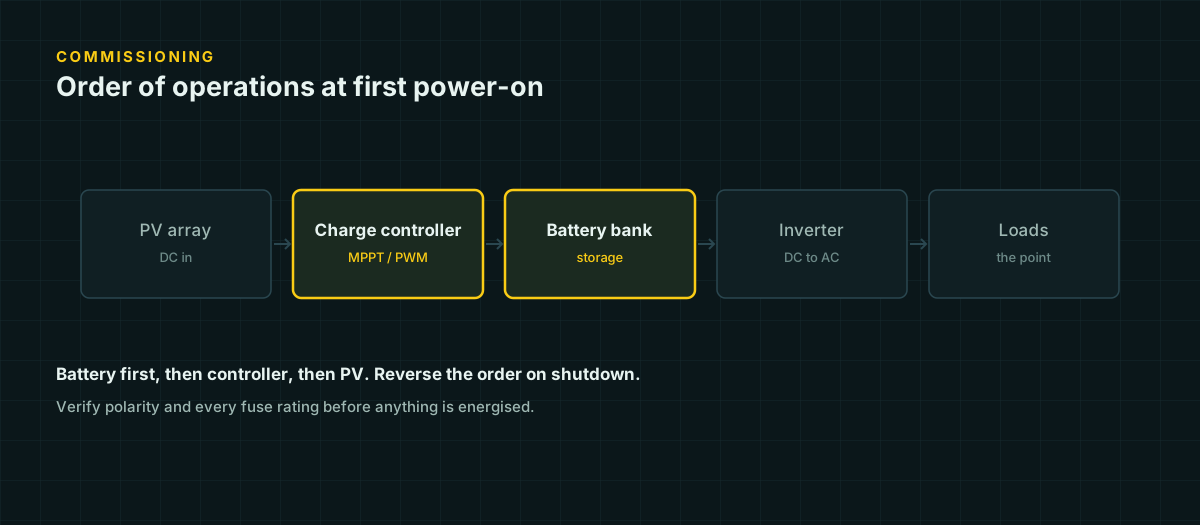
A loosening connection is a slow-motion version of the same failure mode described in our pre-flight checklist: reduced contact area raises resistance, resistance under current makes heat, and heat can accelerate further loosening. The failure is progressive and, critically, it is often invisible on a simple continuity check — a loose connection can still pass current with no fault reading right up until it is warm enough to smell.
This is why torque re-checks belong on a schedule rather than being treated as a one-time installation step. Re-torque to the value printed on the lug or in the equipment manual — never guess at a number, and never assume “it was fine at installation” is still true a year later. A twice-yearly check catches this before it becomes a heat problem; systems in locations with large daily temperature swings, or systems that see frequent heavy load cycling, benefit from checking more often.
Visual inspection targets
A methodical walk-through catches things a meter cannot:
- Terminal corrosion, especially green or white powdery buildup at battery terminals, which increases resistance and can eventually break the connection entirely.
- Insulation condition — cracking, discoloration from heat, or chafing where a cable passes through a metal edge or moves against another surface.
- Enclosure integrity — water intrusion, pest nesting (rodents are notorious for chewing insulation), and ventilation paths blocked by debris.
- Mounting hardware — panel racking bolts, battery box latches, and controller mounting screws, all of which are subject to the same thermal cycling and vibration that loosens electrical lugs.
- Fuse and breaker condition — discoloration around a fuse holder is a direct visual sign of resistive heating and should prompt an immediate torque and connection check, not just a note for next time.
Seasonal tasks
Before winter: confirm charge controller low-temperature charge cutoff behavior matches the battery chemistry’s actual limits, check that flooded batteries are at or near full charge going into cold weather (a fully charged flooded battery’s electrolyte resists freezing far better than a depleted one), and clear any new seasonal shading sources — bare branches in summer can still cast different shadows than a leafed-out tree.
Before summer: check enclosure ventilation, since battery and controller heat tolerance is a real limit and summer ambient temperatures push closer to it, and clean panel surfaces if the system is in a dusty or pollen-heavy environment.
After any major weather event: an unscheduled inspection — high wind, hail, or heavy snow load can loosen mounting hardware or damage wiring in ways a routine schedule would not catch until the next scheduled visit.
What a slowly changing number actually means
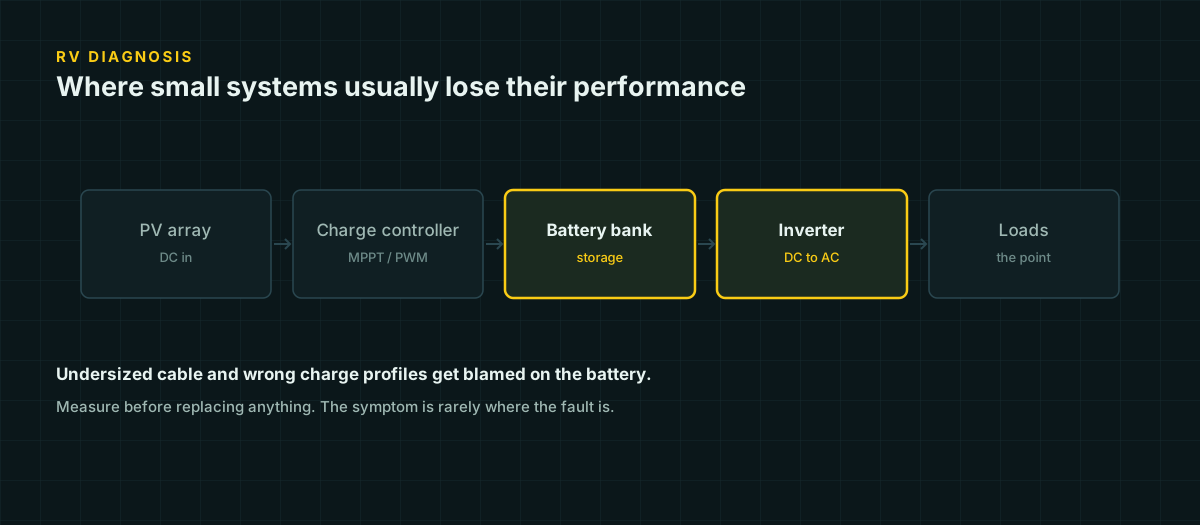
Charge time creeping upward across several consecutive log entries, with comparable sun conditions, points toward a developing connection or controller issue before it points toward battery aging — check the torque and voltage-under-load items first, because they are cheaper to fix than a battery.
Harvest trending down at the same calendar point year over year points toward panel degradation, accumulating soiling that routine cleaning is not fully removing, or new shading — compare against the visual inspection notes from the same period last year.
Resting voltage recovering to a lower value than it used to after a full charge cycle is one of the more reliable early signs of battery capacity fade, particularly in flooded and AGM chemistries, and is worth cross-checking against the battery’s age and its rated cycle life for its typical depth of discharge.
A usable log template
| Date | Battery V (rest) | Battery V (under load) | Charge time to absorption | Daily harvest (Ah) | Ambient temp | Torque check done? | Visual notes |
|---|---|---|---|---|---|---|---|
| Y / N | |||||||
| Y / N | |||||||
| Y / N |
Add an “electrolyte SG” column if the bank is flooded, and add a “string current” column per string if the array has more than one parallel string — both are cheap additions to the same table and both catch problems the core columns above would miss on their own.
Why bother
A maintenance log does not prevent anything by itself. It prevents the specific failure mode where a fault develops slowly enough that no single day’s reading looks alarming, and by the time it is obvious, it has already cost you a battery, a controller, or a wiring harness instead of an afternoon with a torque wrench. The value is entirely in the comparison, not the individual entry — which is also why the log is worth almost nothing if it only gets started after something has already gone wrong.
Sources and further reading
Figures on this page are traceable to the published documents below. Where a standard is referenced, check the edition your local jurisdiction has adopted before relying on it.
- 12.8 & 25.6 Volt Lithium Iron Phosphate Batteries Smart — datasheetVictron EnergySource for LiFePO4 self-discharge figure used in the interval-by-chemistry section.
- 100Ah 12V Smart LiFePO4 Deep Cycle Battery — specificationsBattle Born BatteriesSource for LiFePO4 self-discharge (2-3% per month).
- Motive T-105 data sheetTrojan Battery CompanySource for flooded lead-acid self-discharge (5-15% per month, temperature dependent).